
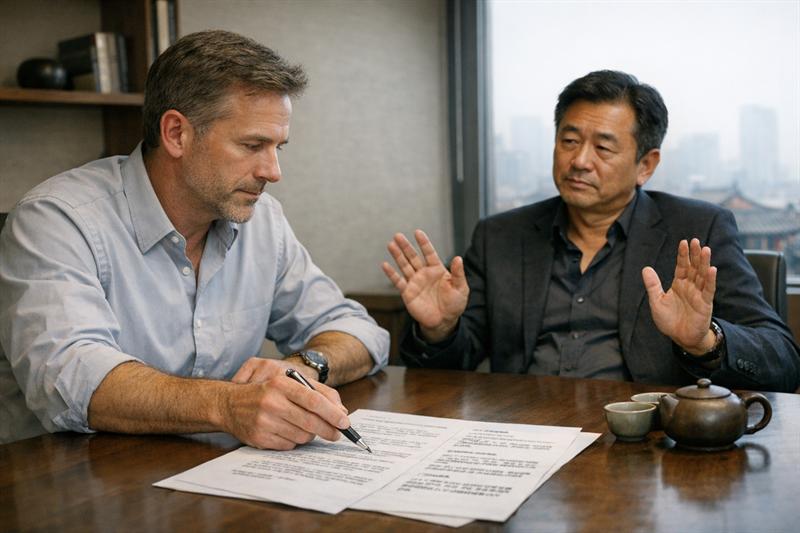
Quick Answer: The biggest China market-entry red flags are unclear partners, vague regulatory guidance, and pressure to move quickly without proper verification. These signals often point to deeper structural risks that become expensive to fix later.
Introduction
A China opportunity can look compelling at first. The market is large, the partner seems capable, and early conversations move quickly. But something feels slightly off. Answers are incomplete, details shift, or timelines feel rushed.
This is where many problems begin. The risk is not the opportunity itself. It is misreading the early signals. At Daniel Garst China Consultant, these patterns often show up before larger issues become visible. Problems rarely begin as obvious failures. They start as small inconsistencies that get dismissed.
This guide focuses on those early warning signs so decisions can be made with more clarity before commitments become difficult to reverse.
Why Risk Awareness Matters Before Entering China
Entering China involves several layers of risk at once. Regulatory requirements, cultural expectations, and operational realities do not always align. When these are misunderstood, problems tend to build over time rather than appear all at once.
A common mistake is committing too early based on partial information. This can lead to partnerships or market-entry structures that are difficult to unwind. For a closer look at how this plays out, see China market entry mistakes foreign businesses still make.
Early decisions shape everything that follows. If the signals are misread at the beginning, the cost often shows up later in delays, disputes, or stalled expansion.
Red Flags in Business Partnerships
Partnership risk is where many problems take root. The wrong partner does not always cause immediate failure. More often, issues build as expectations, authority, and incentives drift out of alignment.
Unclear Ownership Structures
- Difficulty identifying who actually controls the company
- Multiple layers of entities with inconsistent explanations
- Shifting answers about decision-makers
If ownership is unclear, accountability is usually unclear as well. That often leads to disputes later when decisions carry financial or contractual consequences.
Overpromising Market Access
- Claims of guaranteed government connections
- Promises of rapid expansion without specifics
- Results that cannot be independently verified
This often creates unrealistic expectations. When results fall short, the explanation changes instead of the underlying assumptions being addressed.
Reluctance to Formalize Agreements
Some partners push to move forward without clear contracts. This is often framed as a relationship-first approach. In practice, it reduces clarity. A common pattern is delaying formal agreements until after time or money has already been committed. That is usually when leverage begins to shift.
Regulatory and Compliance Warning Signs
The regulatory environment can be complex and uneven. Interpretation matters. Misreading requirements at this stage can create problems that surface later during operations or expansion.
Vague Licensing Requirements
- Unclear or changing explanations of required permits
- Missing documentation or incomplete answers
- Different answers from different contacts
This can lead to delays or blocked activity later. Licensing issues do not always stop a project at the beginning. They often become more visible when execution or scaling starts.
Inconsistent Government Messaging
Conflicting guidance from different sources is not unusual. The risk comes from assuming those differences will resolve themselves. In practice, they often need to be clarified before moving forward.
“Fast-Track” Approvals That Bypass Normal Channels
- Offers to accelerate approvals unusually quickly
- Lack of clarity on process or authority
- Reliance on informal connections
This is where compliance risk increases. What looks efficient early on can create exposure later if the process cannot be clearly explained or supported.
Cultural Misalignment That Signals Deeper Risk
Cultural differences are not just communication challenges. In some cases, they can signal deeper business misalignment. Understanding how behavior connects to decision-making is critical. For additional context, see understanding Chinese culture for business.
Communication That Avoids Specifics
Indirect communication can be normal. Consistent avoidance of specifics is different. It can mean key details are not being clearly addressed, which creates gaps in understanding.
Misunderstanding Decision-Making Hierarchy
- Engaging with contacts who may not have decision authority
- Unclear ownership of final decisions
- Frequent internal checks without clear outcomes
This often leads to stalled progress. Discussions appear productive but do not result in actual decisions.
Pressure for Rapid Trust or Commitment
- Urgency to move forward without full clarity
- Emphasis on relationship over structure too early
- Time pressure tied to opportunity claims
This is an important signal. Legitimate opportunities should hold up under scrutiny. Pressure often means something important is being skipped.
Financial and Operational Red Flags
Financial and operational details often reveal risk faster than high-level discussions.
Unusual Payment Structures
- Large upfront payments without clear milestones
- Complex or unclear payment routing
- Misalignment between payment and deliverables
This reduces leverage. Once payment is made, negotiating position usually weakens.
Lack of Verifiable Track Record
Some companies present strong claims but provide limited verifiable evidence. When references, case examples, or operating history cannot be confirmed, that risk is already visible.
Supply Chain Opacity
- Limited visibility into sourcing or production
- Resistance to audits or verification
- Inconsistent operational details
This can become a major issue during scaling. For a more detailed breakdown, see how to assess China supply chain risk before expanding.
Intellectual Property and Brand Risks
IP issues are often underestimated early. That is when long-term limitations can start to take shape.
Pre-Registered Trademarks by Third Parties
This is a common problem. Companies enter the market and find their brand already registered. That can immediately limit how they operate under their own name.
Requests for Full Disclosure Too Early
- Requests for detailed product or strategy information
- No protections in place before sharing
- Pressure to disclose quickly
This creates exposure. Once information is shared, control over how it is used becomes harder to maintain.
Weak Contractual Protections
Contracts that rely on assumptions rather than terms that fit the local operating environment can create gaps. Those gaps often become visible only when a dispute arises.
How to Evaluate Risk Before Committing
Risk evaluation needs to be structured. Waiting for clear problems is one of the most expensive ways to approach market entry.
Structured Due Diligence Approach
- Verify ownership, licensing, and financials independently
- Cross-check information across multiple sources
- Validate operational claims directly where possible
For a deeper framework, see China market research methods.
Local Expertise vs Remote Assumptions
This is where many companies go wrong. Remote analysis can miss local realities. A common pattern is relying on information that appears complete but lacks the context needed for sound decisions.
Scenario Planning
- Test assumptions under different outcomes
- Plan for regulatory and partnership risks
- Define exit or adjustment options early
This creates flexibility before problems become harder to unwind.
Mid-Decision Check: Are You Already Seeing These Signs?
If the following are already happening, the risk is no longer theoretical.
- Key details keep changing or remain unclear
- You are being asked to move forward quickly without verification
- Ownership, authority, or process is difficult to confirm
- Financial or operational information cannot be validated
When this pattern appears, the next step is usually to pause and reassess before moving forward.
Where Professional Guidance Makes a Difference
Some risks are hard to interpret without local context. This is where structured analysis, market research, and cultural interpretation can add value. At Daniel Garst China Consultant, the focus is on identifying patterns early, before they become harder and more expensive to address.
The goal is not to remove all risk. It is to make risk more visible and manageable so decisions are based on reality rather than assumptions.
Key Takeaways
- Many China business red flags appear first as small inconsistencies
- Partnership clarity is one of the most important factors
- Regulatory ambiguity can create downstream operational risk
- Cultural signals sometimes reflect deeper structural issues
- Verification and due diligence matter before major commitments are made
Conclusion
The core problem is not a lack of opportunity. It is misreading risk at the beginning. Small signals get ignored, and those signals can turn into larger structural problems later.
That can lead to delays, failed partnerships, or financial loss that is difficult to recover once commitments are in place.
At Daniel Garst China Consultant, this is where the work is focused. Identifying these patterns early can change the outcome. If there are already unclear signals, inconsistent answers, or pressure to move forward quickly, the next step is to pause and evaluate the situation properly.
That step often makes the difference between a controlled market entry and a costly correction later.
FAQ
What are the biggest risks of doing business in China?
The biggest risks include unclear partnerships, regulatory complexity, and limited transparency. These often show up as vague agreements, inconsistent requirements, and difficulty verifying information. Identifying them early helps prevent larger problems later.
How can companies identify red flags in Chinese business partners?
Common red flags include unclear ownership, overpromising, and reluctance to formalize agreements. These behaviors can signal deeper issues. Verifying these areas early provides more clarity before commitments are made.
Is due diligence necessary before entering the Chinese market?
Yes. Due diligence is an important step for verifying partners, licensing, and operations. Without it, decisions are more likely to be based on incomplete information. A structured process improves decision quality.
What cultural factors create risk in China business deals?
Indirect communication, unclear hierarchy, and pressure for quick trust can create risk. These factors often lead to misunderstandings about authority and expectations. Understanding them improves how early signals are interpreted.
How do you protect intellectual property in China?
Protecting intellectual property usually involves early registration, limiting disclosure, and using well-prepared agreements. Problems often begin when protections are delayed. Early action helps reduce exposure.
What should companies check before entering the China market?
Companies should review partners, regulatory requirements, financial structures, and operations. Weakness in any of these areas can point to deeper risk. A structured evaluation provides a clearer basis for moving forward.